
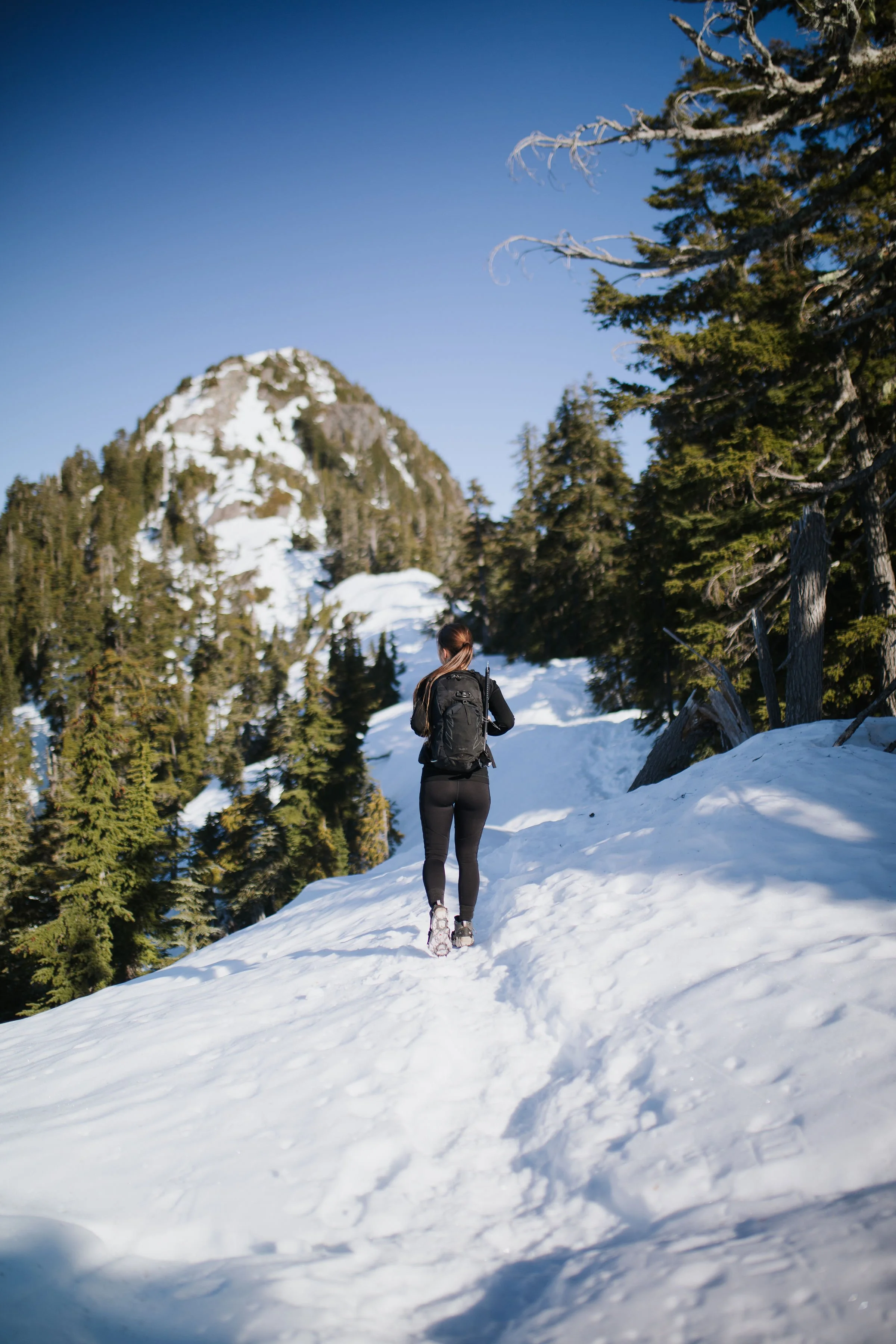
Hiking Safety and Outdoor Tips
Exploring the outdoors can be incredibly rewarding, but it’s important to be prepared. Here are some essential tips for hiking safely and responsibly.
Choose a hike that matches your current fitness level. If this is your first hike or even your fifth, you want to select a hike that allows you to enjoy the experience without overexerting yourself.
We recommend using AllTrails, which is beginner friendly, easy to read and regularly updated with trail conditions. When choosing a trail, check whether it’s an out-and-back or one-way, review the distance, and take note of the elevation gain. Elevation gain indicates how steep the trail is. For out-and-back trails, divide the total distance in half to understand how far you will hike to reach the summit or feature, then factor in your elevation gain. Fewer kilometres combined with high elevation gain generally means the trail is going to be steeper.Share Your Plans. Always leave a trip plan with someone you trust. We truly cannot stress this enough. Include your trail, start time, estimated finish time, and when to contact Search and Rescue if you do not return on schedule. This simple step provides peace of mind for both you and your loved ones. If you get lost or hurt while hiking, and are past your check-in time, someone will be able to get help to you.
Pack your Ten Essentials! These are called “essentials” for a reason. It’s a good habit to bring them from the very beginning, as they can help keep you, your group, or other hikers safe in case of an injury or emergency. Even on short hikes or when the weather looks perfect, Search and Rescue recommends carrying all of these items. No one is completely injury proof, and being prepared can keep you safe or even save your life. Find out more about the Ten Essentials here.
Wildlife Awareness. Bears are common in many hiking areas. Carrying bear spray and knowing how to use it will make you feel more comfortable and confident while outdoors. Be sure to keep it easily accessible at all times, never tucked away inside your backpack. Before starting your hike, check any trailhead information boards for recent wildlife activity. Bears are typically most active at dawn and dusk, so planning hikes during daylight hours can help reduce the chance of an encounter. Make noise while hiking, such as talking, singing, or occasionally calling out to avoid surprising wildlife. If you’re alone, playing quiet music may also help, but very loud music may actually attract animals. Pets should always be leashed, as dogs can provoke bears.
If you encounter a bear, stay calm, back away slowly, and do not run. Speak calmly but firmly, and avoid direct eye contact since bears may perceive it as a challenge. Bears rarely see humans as prey, but creating distance between you is the safest option.Follow the Leave No Trace Principals. We have done our best to break the down LNT Principals into small pieces of information because it can be a lot to remember. These principals allow the outdoors to be fun and enjoyable for everyone for years to come.
Please do not feed wild animals. We've done this in the past when we did not know better, as have many people. We do not want to shame you if you have done this because it’s okay to make mistakes. However, we need to learn from them. When we feed human food to wild birds, chipmunks and squirrels, they often take it back to their hiding spaces and store it for later. Unfortunately, our food does not keep the same way wild food does. Our food rots, and it will rot their entire stash, sometimes leaving them with nothing to eat come winter. For the sake of keeping these animals alive, please do not feed the wildlife.
Pack it in, pack it out! This rule applies for keeping nature beautiful, for everyone, all the time! It includes, but is not limited to: wrappers of all kinds, bottles, bandaids, hair ties, items that broke while hiking, tampon applicators, and toilet paper! Yes, please pack out your applicators and toilet paper! If you think that looks like a good pee tree, there is a chance someone else thinks so too. Toilet paper does not break down as easily as you may think, and it often will litter the landscape for months.
Frequently Asked Questions
-
We enjoy using AllTrails for the majority of our hike searches. They offer a variety of features to narrow down the type of trail you are looking for and provide detailed information about what to expect.
-
Every season will require different gear, but choose something that is comfortable and suits the weather. Clothing that is moisture-wicking and easy to layer is always a great choice. Avoid cotton clothing because it holds sweat and gets cold quickly. The shoes you choose are important, something with good tread is a must!
-
There are many different Facebook groups that offer meetups in each city. If you don't want to go alone, this can be a great opportunity to meet likeminded people.
-
This can depend on the season (how many layers you may need to carry) and how far you plan to hike. We've found the bags we reach for most frequently for day hikes of any length range from 11L-25L.
-
No, most shoes with good tread and grip will do for beginner or well-maintained trails. But you may want to research proper trail runners or hiking boots if you're going to be hiking for long distances, or on rocky, muddy, or steep surfaces.
-
Turning around is a smart decision, not a failure. Weather changes, energy drops, or time runs out, this happens to experienced hikers too. The goal is to get home safely, not to put yourself at risk to get to your destination.